
From Beetle to Golf: Volkswagen's Shift From One Icon to Another
Volkswagen Beetle vs. Golf: Two icons, two eras.
The Volkswagen Beetle and Golf became icons for different reasons, and an honest history cannot detach the first from the company that produced it. Volkswagen began as a prestige project of the Nazi regime; during the war, the factory produced armaments and used forced labor. British-directed civilian production began at the end of 1945. The Beetle later made one durable idea familiar across generations, while the Golf arrived when Volkswagen needed a new architecture for changing roads, families, and expectations.
.jpg)
Volkswagen's official history places both cars within a larger company timeline. The transition between them should not be reduced to one technical change. It was a shift in engineering, packaging, production, and culture.
The story of Volkswagen continues to evolve. Explore the latest Volkswagen models at Volkswagen Marin.
Volkswagen Beetle vs. Golf: From classic design to modern utility.
Check out the: 2025 Volkwagen Golf GTI
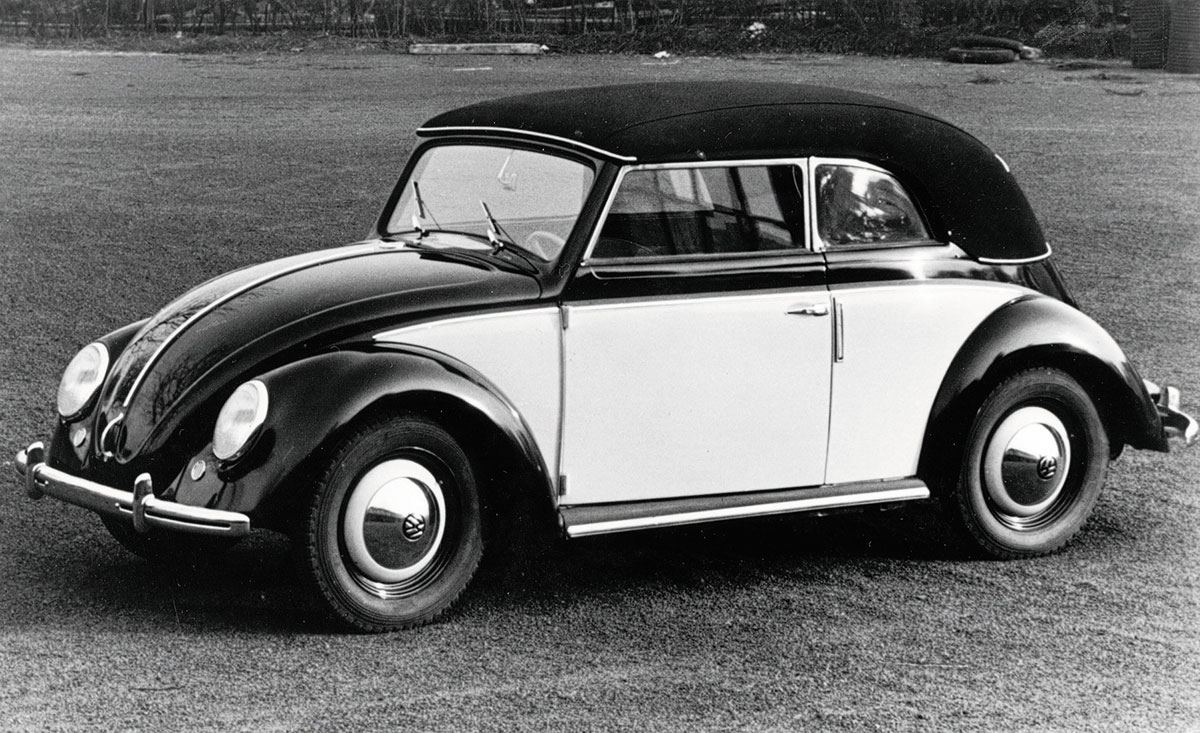
The Volkswagen Beetle turned consistency into identity.
The Volkswagen Beetle became one of the most recognizable cars in automotive history largely because its design remained remarkably consistent while its audience continued to grow.
The Beetle's rear-engine, air-cooled layout shaped its form and character. Its curved roof, compact footprint, and distinctive sound made the engineering recognizable even to people who knew little about cars.
British-directed civilian production and later ownership changed the Beetle's role. In its postwar life, longevity strengthened its identity, and owners could recognize the same basic object across places and decades. That later cultural adoption does not erase the conditions of Volkswagen's founding or its wartime use of forced labor.
.jpg)
Volkswagen Golf: A new era needed a new package.
By the early 1970s, compact-car expectations and Volkswagen's commercial position had changed. A new generation—the Passat, Scirocco, Golf and Polo—moved the company toward water-cooled, front-engine, front-wheel-drive architectures and more flexible manufacturing. Golf production began in 1974, with a hatchback package that created a different relationship among exterior size, passenger room and cargo access.
Those changes were not simply a judgment that one layout was modern and another obsolete. They answered a new brief. The Golf's upright two-box form made everyday utility visible, while its clean design established continuity through restraint rather than resemblance to the Beetle.
More about the Golf: Volkswagen Golf GTI and Golf R 2026 Car of the Year
%2C%20Karmann%2C%20Jolly%20(1960)%2C%20K%C3%A4fer%20Cabriolet%20(1980)%2C%20K%C3%A4fer%201303%20Cabrio%20(1979).jpg)
From iconic shape to everyday versatility
The Beetle's iconography is inseparable from its silhouette. The Golf became recognizable through a broader system: proportion, hatchback utility, direct controls, and the possibility of multiple roles, from basic transportation to GTI performance.
That flexibility helped the Golf remain relevant as customer needs and technology changed. The icon was no longer one fixed mechanical arrangement; it was a useful format capable of development.
The latest: 2027 Volkswagen Atlas
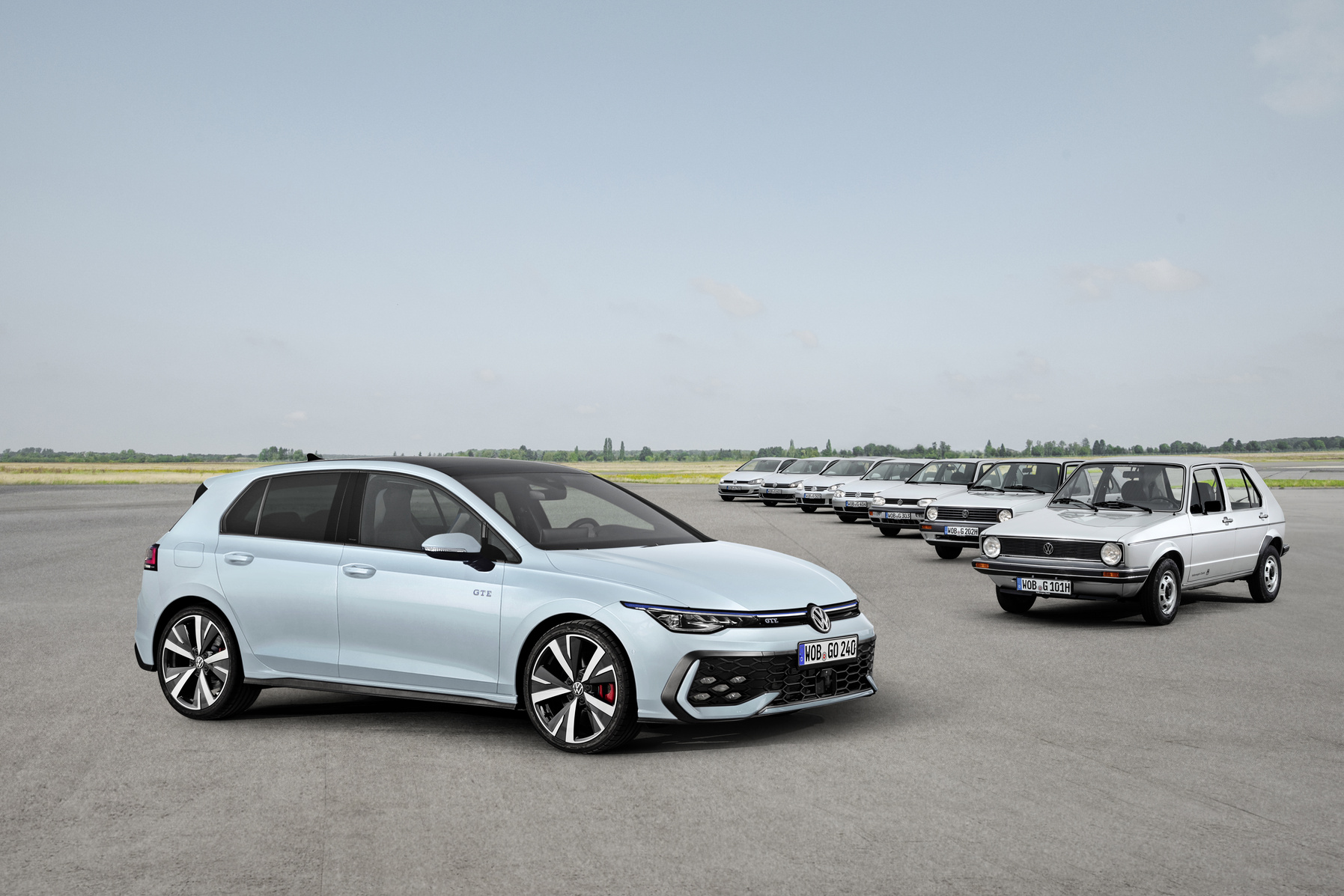
Continuity did not require imitation.
The continuity belongs to postwar product use, not to a shared original mission. The Beetle came to represent broad civilian mobility in a different historical context; the Golf answered a later market with a more flexible package and manufacturing system.
What connects the two is not a shared mechanical formula, but Volkswagen's ability to evolve while maintaining a recognizable identity. Rather than preserving the Beetle's design indefinitely, Volkswagen created a new kind of icon with the Golf—one built around versatility, practicality, and the ability to adapt as technology and drivers' needs changed.
The transition from Beetle to Golf remains an important chapter in Volkswagen's history, showing how an automotive icon can evolve without simply repeating the past.
To explore how Volkswagen's legacy continues today, visit Volkswagen Marin to discover the latest models and find the right fit for your next drive.
Recent Posts

Categories:
Take a look at our latest New Inventory
View New Inventory.png)


